
15 Dec 2025
The Real Delays Aren’t Where Most Solar Teams Think
Solar & BESS companies spend huge effort improving their sales speed, proposal quality, and design accuracy.
But when a project starts moving, delays rarely come from those core activities.
The real friction shows up between the stages, in the handovers, the approvals, the BOQ checks, the task assignments, and the follow-ups that hold the entire flow together.
Every solar EPC, retailer and installer knows this pattern:
• The quote was fast.
• The design was ready on time.
• The customer was excited.
But somewhere in between, something slipped, a BOQ version mismatch, an unassigned task, an unconfirmed install date, a missed internal update. The work continues, but not in sync. These silent gaps slow teams down more than any roof pitch or panel layout.
In an industry where margins are tight and customer expectations are rising, these gaps matter.
That’s why leading solar teams are now shifting away from scattered tools and spreadsheets and moving towards connected Solar & BESS workflow management, where every stage is visible, trackable, and aligned with KPIs.
This isn’t about adding more tools. It’s about reducing the distance between them.
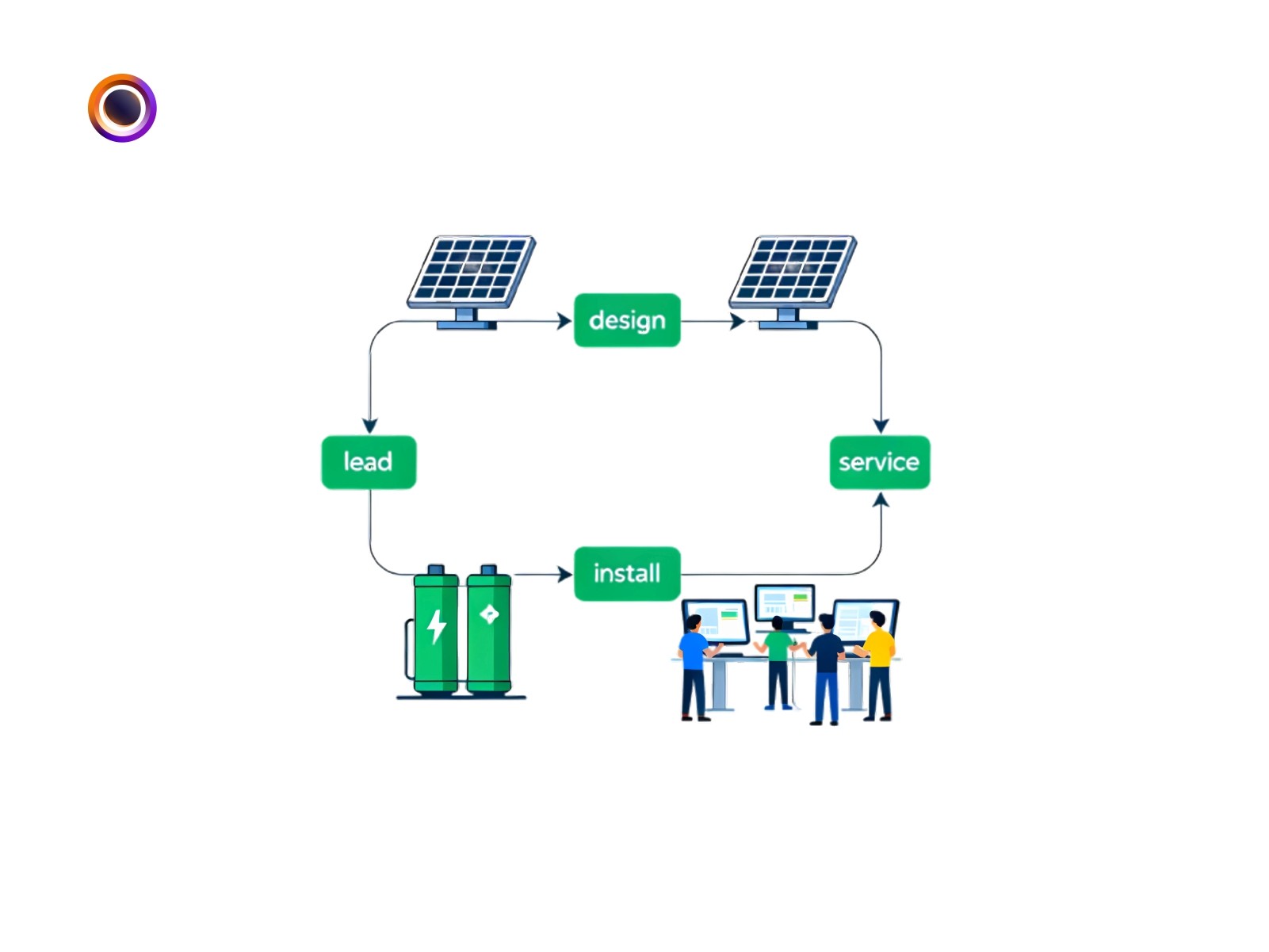
Why Solar & BESS Projects Slip: The Invisible Gaps Between Stages
Solar and battery projects move through multiple well-defined phases, but these phases are often supported by different tools, formats, and communication habits.
This creates friction in places teams don’t notice until a delay surfaces.
Here’s where things usually fall apart.
1. BOQ changes that don’t sync across the team
A designer updates a BOQ, but the sales team still sends the old one.
Or procurement never sees the latest quantity.
This leads to incorrect invoicing, missing components, or rushed corrections.
2. Tasks that aren’t assigned at the right moment
A job moves to the next stage, but the task assignment lags behind:
• Site inspection delayed
• Installation not booked
• Compliance documents not requested
• Stock not pre-reserved
Even a two-day delay compounds quickly when teams manage high volumes.
3. Quote revisions stuck in someone’s inbox
The homeowner requests a change.
Sales edits the proposal.
But the approval sits waiting.
When solar quotes aren’t tracked in real time, teams lose visibility on which version is final, what’s approved, and what’s pending.
4. Team members working from outdated versions
This happens more often than teams want to admit.
Two versions of the BOQ.
Three versions of the quote.
Five versions of the design folder.
Version control issues cost time, confusion, and sometimes re-work.
5. Installation dates shift, without full visibility
A reschedule isn’t aligned across sales → design → operations → installers.
The customer thinks the install is this Tuesday.
The scheduler knows it changed to next Friday.
Not a great experience.
Why These Gaps Matter More as Solar Teams Scale
When teams handle fewer than 20–30 projects a month, spreadsheets and manual coordination often “feel manageable.
But once a business scales:
• Multiple projects overlap
• Approvals run in parallel
• Teams grow
• Customer queries increase
• Install calendars get tighter
• BOQs change more frequently
• Supply availability shifts
• More stakeholders become involved
At scale, manual methods break.
This is where high-performing solar companies separate from the rest, not because they sell faster, but because their workflow between each stage is tighter, clearer and more predictable.
The Structure High-Performing Solar Companies Now Follow
After reviewing hundreds of project flows in EPCs, retailers and installation companies, one pattern stands out:
Teams who deliver consistently have one single connected workflow for every stage of the sales-to-install process.
It looks like this:
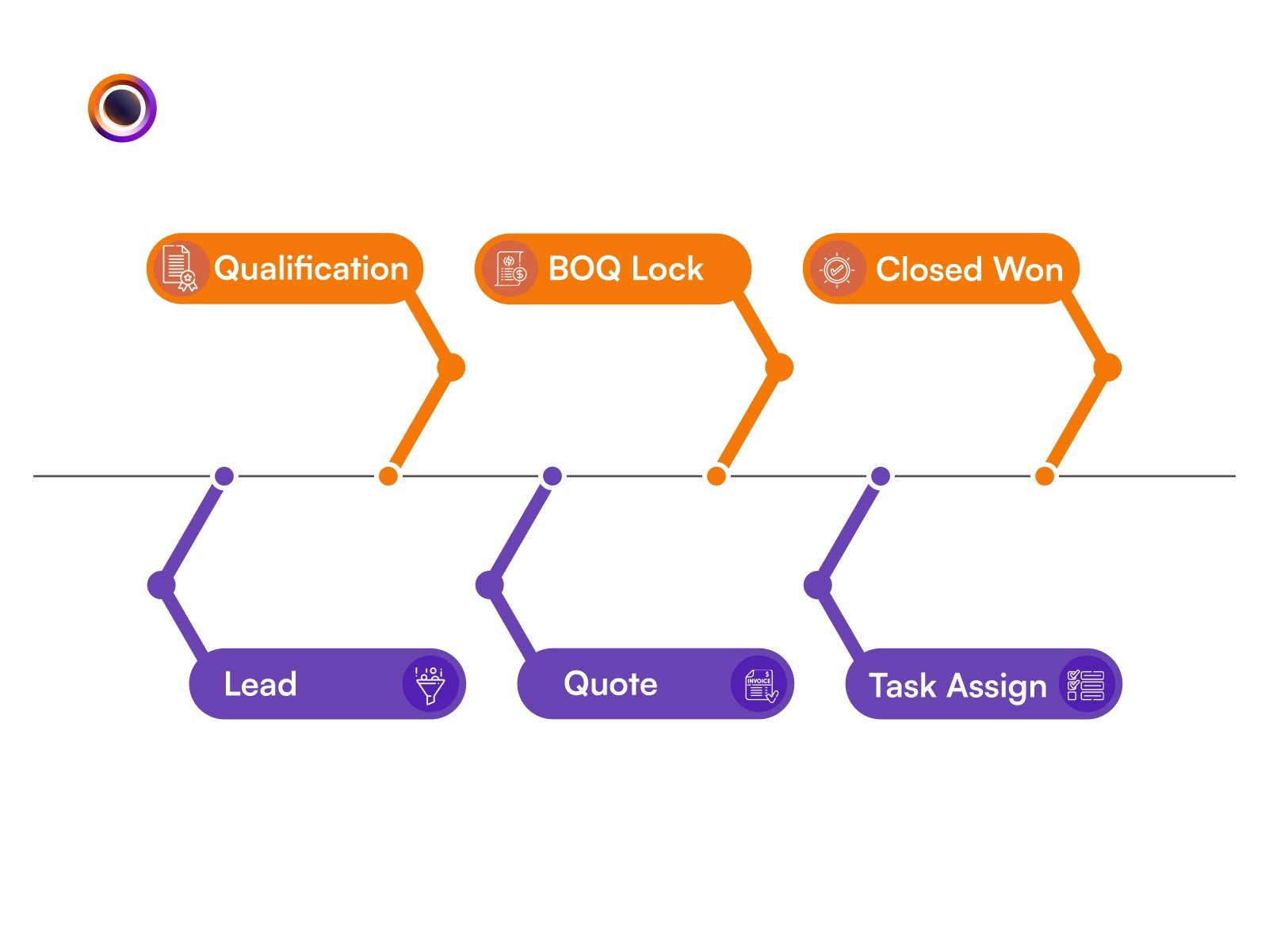
Lead → Qualification → Quote → BOQ Lock → Task Assign → Closed Won
Here’s what happens when each step is connected, instead of being separated by tools or manual handovers.
1. Lead → Qualification
Every new lead starts with a structured pre-screen.
Not on paper.
Not in emails.
Not in someone’s memory.
A single source of truth defines:
• property type
• phase
• roof suitability
• preferred install dates
• budget
• product preference
• battery interest
Teams stop wasting time on non-serious leads, while serious ones move forward smoothly.
2. Qualification → Quote
A qualified lead automatically transitions into quoting.
No copy-pasting.
No chasing details.
No moving between tools.
The quote is generated based on what’s already captured, reducing mistakes and speeding up turnaround.
3. Quote → BOQ Lock
This is where most real-world delays happen.
Once a quote is accepted, everything depends on a clean, accurate BOQ:
• stock planning
• procurement
• installer scheduling
• compliance documents
• final customer price
A locked BOQ is not just a checklist, it’s the anchor of the entire project.
When it’s locked early and tracked properly, downstream steps become far more predictable.
4. BOQ Lock → Task Assignment
This is the heartbeat of timely delivery.
Task assignment is where teams make or lose days.
Solar companies that automate this stage (instead of assigning tasks manually from chats, emails or memory) see:
• earlier inspections
• faster scheduling
• fewer missing documents
• better stock preparation
• smoother install days
Every task gets triggered based on the previous step, not based on who remembers first.
5. Task Assignment → Closed Won
By the time the project reaches “Closed Won”, everything is already aligned:
• customer signed
• BOQ locked
• tasks completed
• invoices aligned
• install date booked
• status visible to everyone
This is how teams reduce friction and deliver consistent outcomes without forcing people to work longer hours.
How a Connected Solar & BESS Workflow Changes Team Performance
A streamlined workflow has measurable impact:
1. Faster sales cycles
Customers get quotes sooner and see clearer steps.
Fewer follow-ups.
Faster decisions.
2. Fewer errors across the project
When BOQ, quote, tasks and updates are all aligned, mistakes drop drastically.
3. More predictable installations
Installers know exactly what’s coming, what’s approved and what needs their attention.
4. Less admin load on teams
Automation and connected steps replace manual updates and repetitive communication.
5. Better customer experience
Homeowners and commercial clients trust teams that run a clean, consistent process.
How Eclipse360 Supports This Connected Workflow
Eclipse360 is built specifically for Solar EPCs, retailers and installers.
Everything mentioned above is what the platform is designed to solve.
Here’s how:
• Lead Management built for solar
Structured qualification
Property details
Battery interest
Priority tagging
• Smart Quoting with clean templates
Fast, accurate quotes
Version tracking
One-click approvals
• BOQ Lock with accuracy protections
Reduce product mismatches
Improve procurement clarity
Avoid last-minute changes
• Automated Task Assignment
Inspection tasks
Compliance collection
Customer follow-ups
Install scheduling
• Full Visibility across sales → design → operations
Teams see the same information.
Nothing gets lost.
Everyone moves together.
Conclusion: Solar Teams Don’t Need More Tools: They Need One Connected Flow
Solar & BESS projects don’t slow down because of the install or the proposal.
They slowdown in the gaps between the stages.
When every step is connected — Lead → Qualification → Quote → BOQ Lock → Task Assign → Closed Won: teams deliver faster, more consistently and with less stress.
If your projects are ready for a cleaner, more predictable workflow, Eclipse360 is built exactly for that.
Latest Articles