9 Apr 2026
Australia is entering a pivotal phase in its clean energy transition, and at the center of this shift is the First Nations Clean Energy Strategy 2024–2030.
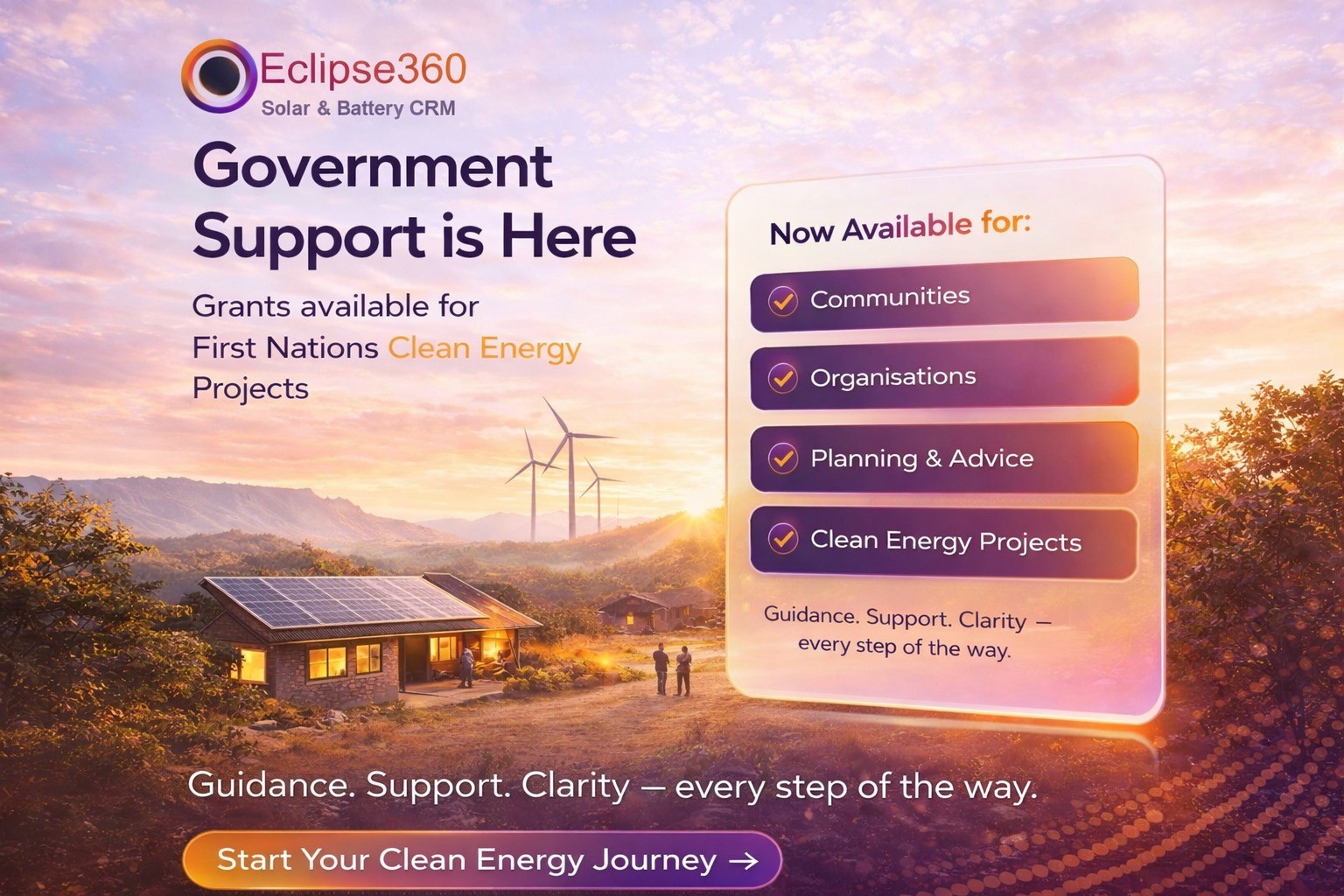
With new federal government grants now available, First Nations communities, organizations, and groups have a significant opportunity to plan, negotiate, and deliver clean energy projects across homes, communities, and Country.
This is more than a policy update. It represents a structural shift toward community-led renewable energy development.
What the Strategy Means
The First Nations Clean Energy Strategy is designed to empower communities to actively participate in the clean energy transition while creating long-term economic and environmental benefits.
The newly introduced grants support early-stage activities such as:
Project feasibility studies
Community consultation and engagement
Negotiation support with developers
Strategic planning for solar and battery systems
This approach ensures that projects are not externally imposed but developed with direct community involvement and ownership.
Why This Matters for the Solar Industry
For solar EPC companies, installers, and renewable energy providers, this initiative introduces a new and growing segment of projects across Australia.
We can expect:
Increased demand for solar and battery system planning
Growth in community-scale installations
Long-term partnerships with First Nations organizations
Greater emphasis on transparent project workflows
The Rise of Community-Led Solar and Battery Projects
A key trend emerging from this strategy is the growth of decentralized energy systems, including:
Solar photovoltaic systems
Battery Energy Storage Systems (BESS)
Hybrid and off-grid solutions
These projects require detailed planning, accurate system sizing, and strong stakeholder communication to ensure long-term success.
The Operational Challenge
While funding unlocks opportunity, execution remains complex.
Solar projects involving multiple stakeholders often face:
Communication gaps
Delays in approvals and coordination
Inefficient documentation processes
Lack of visibility across project stages
Without structured systems in place, these challenges can impact timelines, budgets, and overall project success.
How Solar Businesses Can Prepare
To successfully engage in these projects, solar companies must strengthen their operational capabilities.
This includes:
End-to-End Project Visibility
Tracking projects from planning to installation ensures transparency and accountability.
Improved Proposal and Engagement Processes
Clear and data-backed proposals help build trust with communities and stakeholders.
Data-Driven Planning
Using tools such as a solar battery calculator improves accuracy in system sizing and feasibility planning.
Scaling with the Right Systems
As government-backed projects increase, solar businesses adopting structured platforms will gain a competitive advantage.
These include:
Solar CRM software for lead and stakeholder management
Project management systems for workflow tracking
Installation and procurement tools for execution efficiency
Looking Ahead
The First Nations Clean Energy Strategy represents a long-term shift toward inclusive and community-driven energy development.
For First Nations communities, it enables energy independence and economic participation.
For the solar industry, it opens new markets and long-term growth opportunities.
Final Thoughts
The availability of federal grants under this strategy marks a turning point in Australia’s renewable energy landscape.
Businesses that stay informed and build strong operational systems will be best positioned to participate in this next phase of solar growth.
Latest Articles